Categories
News and Announcements Releases

Winter Scenes

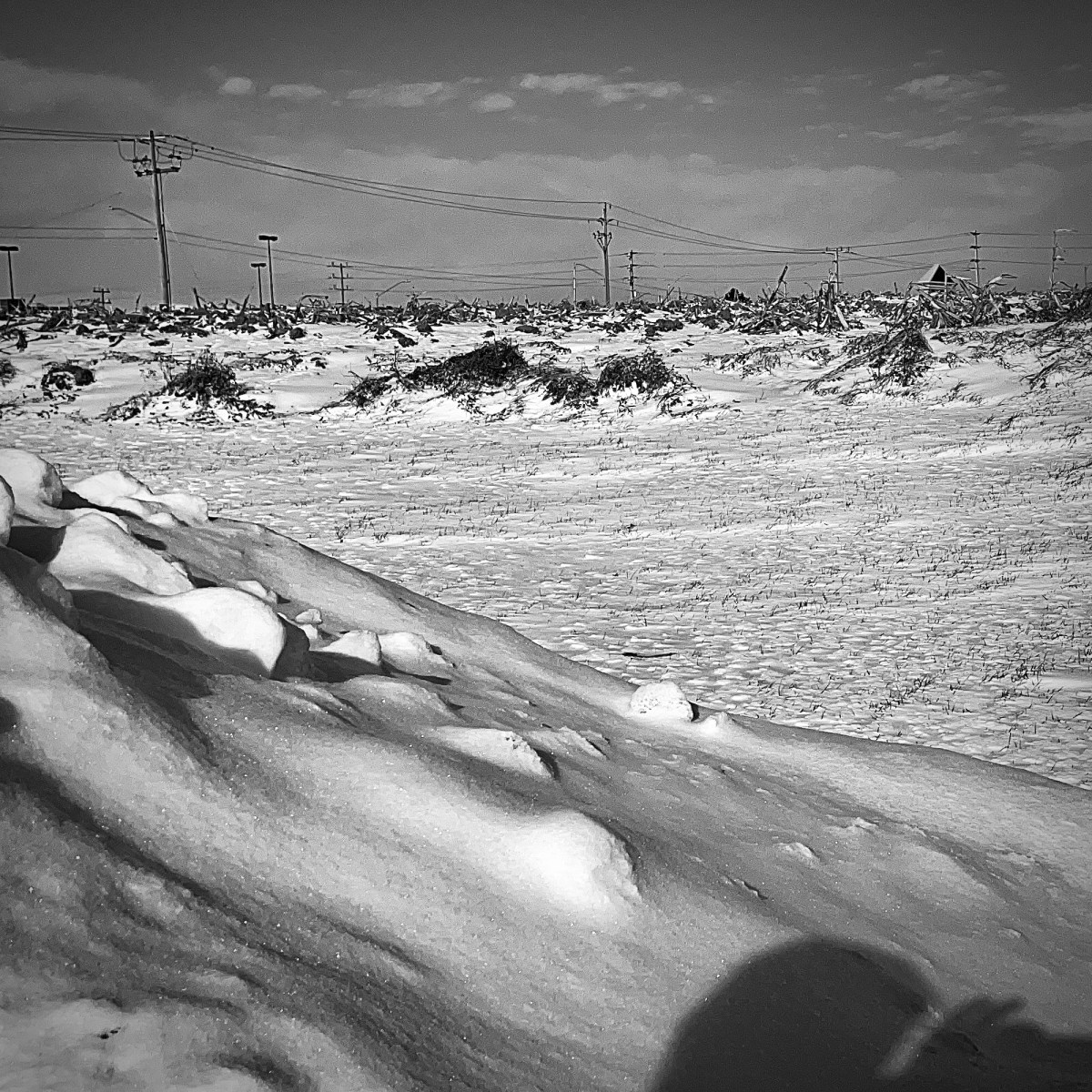
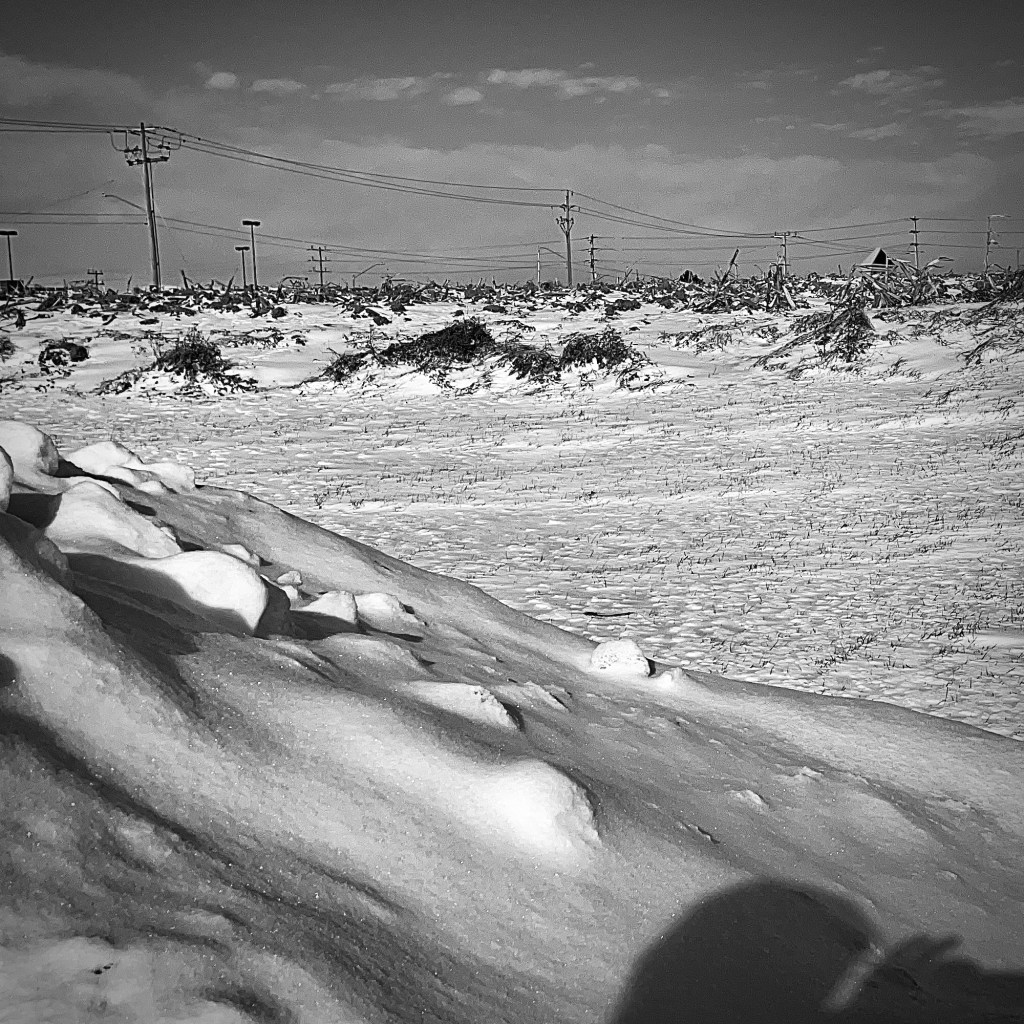
For our first release of 2024 we have a set of Winter field recordings from Canada, recorded in January 2023 and rediscovered a year later, as the first deep freeze of 2024 set in. There are three main recordings, each presented first naturally and next as its uncanny double.

Categories
News and Announcements

New places to listen

We are pleased to announce that the Gothic Listening project now has distribution set up and is available on most major streaming sites, such as Spotify and Youtube Music. Our main file hosting platform remains Bandcamp, and that is where you can head to download the files. All releases can be downloaded for free, and most are licensed under a CC BY-SA 3 license In the spirit of collaboration and remixing.

We continue to invite guest submissions, and the process, and the submission process and guidelines can be found here. Submissions can be field recordings, sound art, or musical pieces, and may be fully original or can rework, remix, or reimagine sounds already released on the Gothic Listening site. Ongoing projects open for submission are:

  • The Gothic Everyday, which invites recordists and sound artists to listen for the gothic resonances in everyday life, whether by capturing things as they are or by remixing and reimagining ordinary sounds to reveal their uncanny aspects.
  • Ecogothic/Ecoacoustic, which invites you to listen to to the sounds of gothic nature in field recordings and/or remixed and reimagined sounds.
  • Unvoiced—which invites you to recreate the non-verbal, non-musical sounds of gothic and horror film and television, using foley art and other techniques to think through the sound track and/or reimagine it as sound art.

Find us on:

Bandcamp

Spotify

Youtube / Youtube Music

Instagram

Twitter

Categories
News and Announcements Releases

Enchanted Forest, slowed

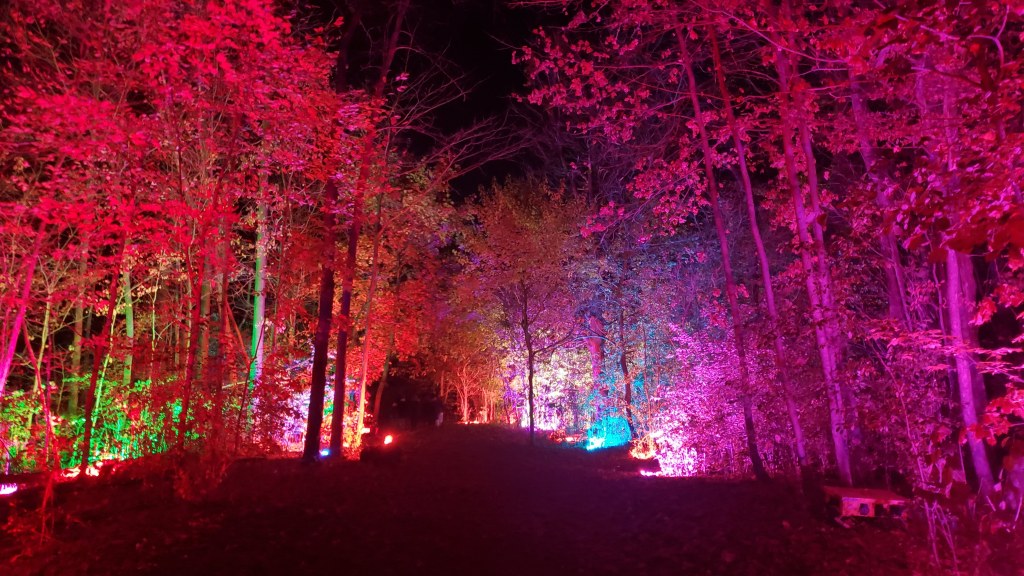
Our second release for March 2023 features a new entry in the Ecogothic/Ecoacoustic series, built around a field recording by guest contributor Lisa Brackenridge.

The first piece takes us on an eerie, time-stretched walk through a city park during an October 2022 augmented reality event. Brackenridge writes: “This track works with sounds recorded at a placemaking event in Kitchener, Ontario called Enchanted Forest: a one-kilometer trail loop illuminated with light displays, art, and sound effects. I imagine the creators of the installation had the goal of augmenting the landscape to make it somewhat magical. However, “enchanted” can also mean being bewitched; and although bird sounds are common in that space, hearing prerecorded birdsong at night was uncanny. By slowing down the sound by only thirty per cent, I was able to further augment the perception of the landscape: the slowed-down sounds change the sounds of an enchanted space to that of a haunted or eerie space.”

Track 2 is a Gothic Listening remix that slows the birdsong further, and blends it with some original field recordings of tropical birds. This walk in the park was already a little bit unsettling, even before slowing it down, because of the way that natural sounds blended with prerecorded birdsong. The more it slows down, the more that uncanniness comes to the surface, like ghostly voices you can hear in the forest if you listen closely. 

Categories
News and Announcements Releases

Inside/Outside

This week sees the first of two releases we have planned for March 2023. This first one, from guest contributor Christopher Rogers, is an eerie piece of audio documenting the sounds of ordinary domestic spaces.

This piece, framed as a soundtrack to a dismal, atmospheric photograph, works right at the intersection of two ongoing GL projects: it focuses on the everyday and the ordinary at the same time that it brings out the “ecogothic’ dimensions of those ordinary living spaces (their insides, their outsides, and the passages between them).

About the project, Rogers writes:

“This recording attempts to soundtrack a photo taken on a foggy day in a backyard in Waterloo, Ontario, when the weather gave the usually vibrant space a feeling of eeriness and abandonment.

“The audio experiments with blurring the boundaries of human and natural spaces by reimagining an everyday activity – going outside – through an ecogothic lens. Interior or human space is signaled initially with the drone of a furnace followed by a sliding door. The recording then transitions to the backyard space where bird songs and road noise are layered to create a sense of liveliness. A familiar sliding door sound signals a return indoors, where a turntable can be heard skipping. Time stretching and reverb are added throughout the recording to emphasize the strangeness of these everyday sounds.”

Categories
News and Announcements Releases

Wind Storm 12.23.22

This month’s piece is an unprocessed field recording capturing the sounds of the recent wind storm, on December 23, 2022, as an arctic front created a sudden chill throughout much of central and eastern North America. While there were devastating blizzards and snowfall not too far away, at this recording site, a house at the edge of the woods, the main effect was an extreme cold, and high winds that (in the recording) can be heard loudly in the winter-bare trees and wind chimes.

Listen to it attentively or inattentively; treat it as an ambient background for meditative reflection or for your everyday business; or sample it for your own purposes, musical or otherwise.

This is the third entry in the Ecogothic/Ecoacoustic series, an ongoing project that invites recordists and sound artists to listen to the sounds of gothic nature in field recordings and/or remixed and reimagined sounds. If you have recordings of your own to share, or if you want to use these mostly raw recordings as the basis for your own remixed and reimagined sounds, visit our submission guidelines to read about how to get involved, and check out our open, ongoing projects. Gothic Listening invites both original submissions and reimaginings or remixes of any of the project’s existing creative-commons-licensed sounds.

Categories
News and Announcements Releases

Strigiform/Accipetrine

We’ve just released the second entry in the Ecogothic/Ecoacoustic series, an ongoing project that invites recordists and sound artists to listen to the sounds of gothic nature in field recordings and/or remixed and reimagined sounds.

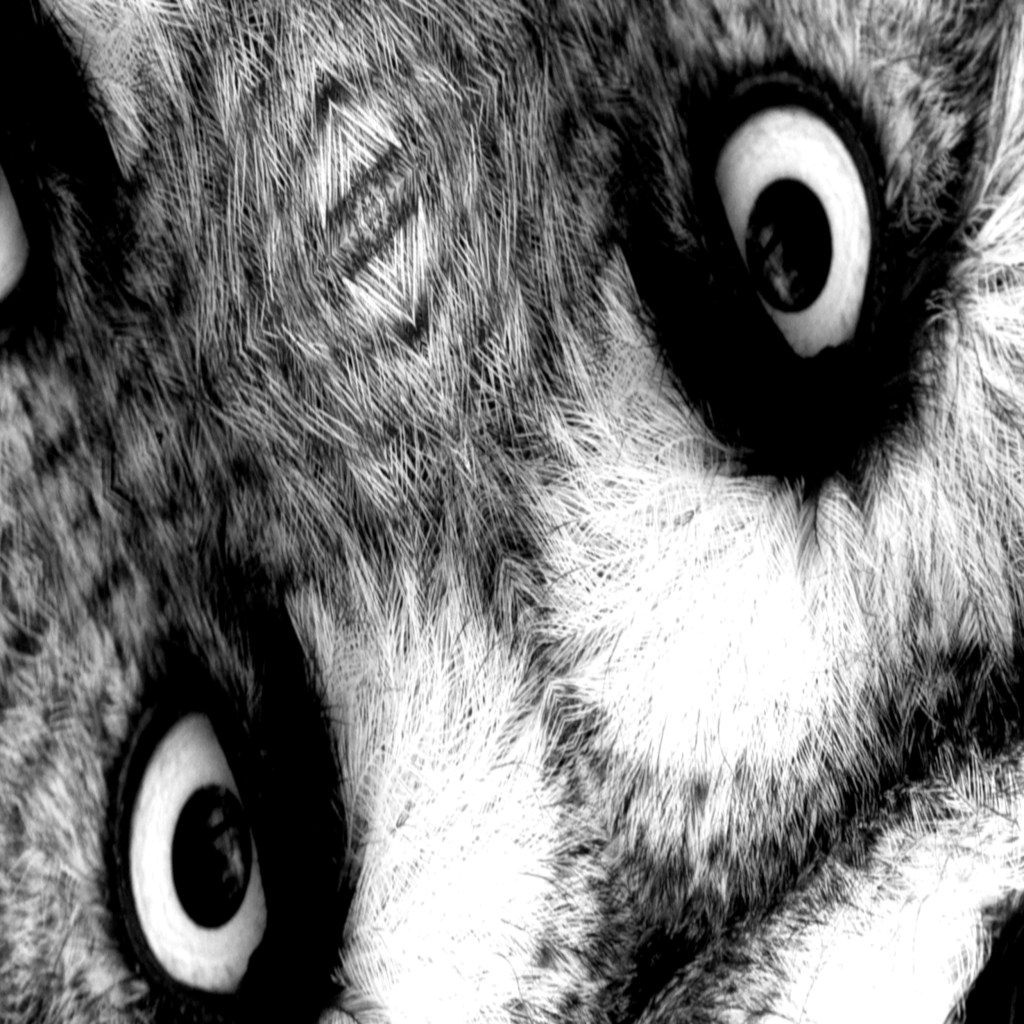
This entry in the series pairs recordings from two sessions listening to birds of prey. These were recorded in the same location, a wooded area in Suffolk County, New York, with a large raptor population. The first track is a mostly untreated field recording consisting of ten minutes of rain, hooting owls, and a distant train. The second is a shorter loop of birdsong punctuated by the cry of a Cooper’s hawk. That clip is played forward, then in reverse, then in both directions at once.

If you have recordings of your own to share, or if you want to use these mostly raw recordings as the basis for your own remixed and reimagined sounds, visit our submission guidelines to read about how to get involved, and check out our open, ongoing projects. Gothic Listening invites both original submissions and reimaginings or remixes of any of the project’s existing creative-commons-licensed sounds.

Image credit: adapted from a photograph by Tony Hisgett, licensed under CC-BY-2.0 creativecommons.org/licenses/by/2.0/deed.en

Categories
News and Announcements

Fall 2022 update

We are pleased, this Halloween, to announce both the latest entry in our series in “Gothic Everyday;” and that the Gothic Listening project is now in shape to start posting new releases approximately monthly. New entries will be released as individual tracks or albums on Bandcamp (where our files are hosted), and also gathered and embedded on this website.

This month’s release, “Car Park/Stairwell,” is the second entry in the Gothic Everyday series – an ongoing project that invites recordists and sound artists to listen for the gothic resonances in everyday life, whether by capturing things as they are or by remixing and reimagining ordinary sounds to reveal their uncanny aspects.

This entry pairs two examples of natural reverb, in a car park and a stairwell. As a sequel to the first Gothic Everyday release (which came about during the stay-at-home phase of the COVID-19 pandemic), this might be considered as the sound of an uneasy return to workplaces.

The main track time-stretches and augments a single blast of a car horn in a parking garage. The original untreated recording, along with the time-stretched but otherwise untreated version, are available as bonus tracks with album download on Bandcamp.

Gothic Listening invites both original submissions and reimaginings or remixes of any of the project’s existing creative-commons-licensed sounds. For more about the Gothic Everyday and other Gothic Listening projects, or to get involved, check out our open, ongoing projects and submission guidelines.

Categories
Essays News and Announcements Releases

Okay, Bob (Echo)

“Okay, Bob (Echo)” is the first entry in the “Unvoiced” project, an ongoing series that invites artists to reimagine the non-verbal sounds of gothic and horror film and television, whether by remixing public domain materials or by using foley art and other techniques to think through, recreate, or reimagine the nonverbal sound track.

This first entry in the series was released on the occasion of the academic conference “Beyond Life and Death: Twin Peaks at Thirty.” The first portion recreates the nonverbal and ambient sounds from a scene in the Twin Peaks pilot episode (aired April 8, 1990), from timestamp 52:42-53:42. The second part samples that recreation and remixes it into a drone track.

In this scene Audrey sits on a desk, twisting a pencil into a styrofoam coffee cup; pulls it out to let the coffee spill over the paperwork on the desk, and then walks off loudly toward the conference room to cause similarly impish disruption with the Norwegian investors assembled there.

At that point, this track transitions into a drone built from samples of that recreated and “unvoiced” scene, processed using techniques that feature prominently in the sonic world of Twin Peaks itself–namely time-stretching and reverse processing.

The scene itself was chosen for its foregrounding of the obtrusive sound of the pencil twisting into styrofoam, but the process also led to an unexpected discovery. Audrey’s remark to the hotel employee – “Okay Bob – Okay Bob – Okay” – is palindromic, and seems meant as an eerie foreshadowing of revelations that will come about regarding the more sinister entity of that name, and of his affiliations with the preternatural world of the Black Lodge and its reverse-processed speech. However, playing this phrase backwards revealed an extra layer as “Okay Bob – okay Bob – Okay” became “Echo – Bob Echo – Bob Echo.”

Materials: styrofoam, water, paper, shoes, chair, bird, electric piano.

Recommended reading:

Pieter Dom, “To Score The Haunting Woodsmen Scene, David Lynch Severely Slowed Down Beethoven’s ‘Moonlight Sonata’ And Mixed It With Monkey Screeches,” welcometotwinpeaks.com/music/woodsmen-beethoven-moonlight-sonata/

Michael Goddard, “Telephones, Voice Recorders, Microphones, Phonographs: A Media Archaeology of Sonic Technologies in Twin Peaks,” www.sensesofcinema.com/2016/twin-peaks/sonic-technologies-in-twin-peaks/

Greg Hainge, “When Is a Door Not a Door? Transmedia to the Nth Degree in David Lynch’s Multiverse.” In Transmedia Directors: Artistry, Industry and New Audiovisual Aesthetics, edited by Carol Vernallis, Holly Rogers, and Lisa Perrott, 271–84. Bloomsbury, 2020.

Alice Kuzniar, “Double Talk in Twin Peaks.” In Full of Secrets: Critical Approaches to Twin Peaks, edited by David Lavery, 120–29. Wayne State University Press, 1995.

John McGrath, “On (Vari-)Speed across David Lynch’s Work.” In Transmedia Directors: Artistry, Industry and New Audiovisual Aesthetics, edited by Carol Vernallis, Holly Rogers, and Lisa Perrott, 285–90. Bloomsbury, 2020.

Holly Rogers, “The Audiovisual Eerie: Transmediating Thresholds in the Work of David Lynch.” In Transmedia Directors: Artistry, Industry and New Audiovisual Aesthetics, edited by Carol Vernallis, Holly Rogers, and Lisa Perrott, 241–70. Bloomsbury, 2020.